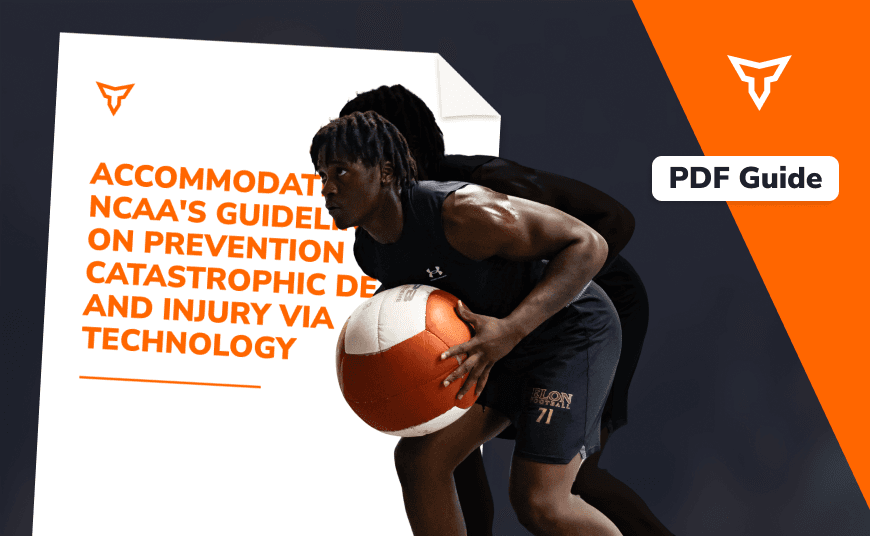
Accommodating NCAA's Guidelines on Prevention of Catastrophic Death and Injury via Technology
What the NCAA's 2019 recommendations on catastrophic injury and death mean on the floor: transition periods, acclimatization and certified staff in all three divisions. Plus how documented training can stand as your record. For college strength and sports medicine staff.
Yours free
We’ll ask who you are once. After that the free library is open, for good.
Yours free
We’ll ask who you are once. After that the free library is open, for good.
Inside the guide
12 pages
The first 3 pages exactly as they appear in the PDF. Select any page to see it full size.
- +9more pages
From the opening pages
The NCAA has ramped up regulations and guidelines for collegiate sports performance. Many recommendations can become administrative burdens on sports performance and sports medicine staff. TeamBuildr has already begun formatting its platform to accommodate for these regulations and helps sports performance programs comply in a streamlined way.
The NCAA has released its document in July of 2019 , Interassociation recommendations: Preventing catastrophic injury and death in collegiate athletes, in which they address “unified standards of care” in order to help prevent catastrophic injuries and deaths in collegiate athletes. These recommendations emerged and were developed from the 2016 NCAA Safety in College Football Summit where they were ultimately approved according to the Uniform Standard of Care procedures. The Uniform Standard of Care policy is a “procedural pathway that guides and facilitates communication the Committee on Competitive Safeguards and Medical Aspects of Sports (CSMAS) and the [NCAA] Board of Governors on issues of student-athlete health and safety.”
The document recommendations provide an Association-wide solution to mitigate catastrophic injury and death in collegiate athletes. The effective date of the document was August 1, 2019, meaning that this is the “starting line” for school adoption of the recommendations, which includes beginning the process of “determining alignment strategies with strength and conditioning professionals.” As stated by the NCAA Board of Governors, these recommendations apply to all athletics personnel, athletics health care administrators (AHCs), and anyone who has a role to play in the prevention of catastrophic injury and death in student-athletes, including coaches and their staff. The AHCs will have a special responsibility in that they will be the ones to ensure that the recommendations are broadly distributed among members of the athletic department.
Some of the outlined recommendations, such as developing a reporting structure for strength and conditioning professionals, can be immediately actionable at the institutional level. This White Paper aims to define specific best practices specifically to the strength and conditioning department that can be implemented with the use of the strength and conditioning software TeamBuildr.
To add further context as it applies to strength and conditioning departments, attorney Reed Wainwright interprets the letter to mean:
Strength and Conditioning professionals should be proactive in implementing the Recommendations of this document. Foremost, the health and safety of the student-athlete should never be at risk as a result of the implementation of any strength and conditioning program. The strength and conditioning coach’s failure to follow the Recommendations would be considered negligent if a catastrophic injury and/or death occurred during the implementation of the strength and conditioning program.
Chapters
- 1Accommodating NCAA's Guidelines on Prevention of Catastrophic Death and Injury via Technologyp.1
- 2Prevention of Non-Traumatic Injuries and Deathp.5
- 3Coach Certification and Qualified Personnelp.9
TeamBuildr
Run this with your athletes.
The programming, the tracking and the reporting in one place, built by coaches who write the same sessions you do.
Read next
For College
Read on the blog · 1 min
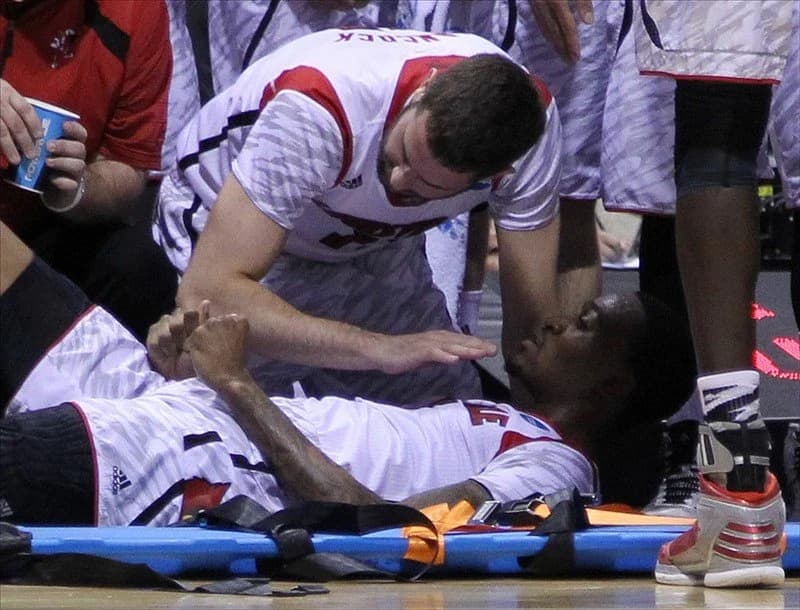
FreeThe NCAA and Injury Prevention: 16 Years in the Makingopens blog.teambuildr.com in a new tab
Take a look at some NCAA injury statistics and common sports injury causes see what we can do for sports injury prevention for our athletes.
Also in Injury & Recovery
Read on the blog · 4 min
FreeThe Silent Strain of Sleep and Travel in Basketballopens blog.teambuildr.com in a new tab
Learn how sleep and travel affect basketball performance—and why tracking these factors is key to recovery, injury prevention, and athlete success.

Read on the blog · 1 min
FreeOhio State's Strength Staff Prepares for Bama by Dressing Like Elvesopens blog.teambuildr.com in a new tab
Ohio State's Strength Staff dresses like elves to relax players before their upcoming NCAA playoff debut against the University of Alabama.
PDF · 21 pages
Free · sign up9 Things Coaches Should Do Every Day
Lee Weber of Rose Hill High School on nine things he builds into every session, from varied warm-ups and posterior chain work to mobility and team challenges. Written during COVID, so each comes with an at-home version.
PDF · 27 pages
Free · sign upBuilding Athletes Outside the Weight Room
A 27-page guide to the work that happens away from the bar: nutrition, sleep and mindset. Fueling amounts before and after training, a recovery smoothie, creatine basics, sleep habits for teenagers and SMART goal-setting, written for high school athletes and the coaches who train them.

PDF · 2 pages
Free · sign upThe Ultimate Guide to Building Athletes: Nutrition, Recovery, & Nutrition
A two-page tip sheet for young athletes on the basics that drive recovery: sleep, eating around practice, hydration and simple work like foam rolling, stretching and cold tubs. Short enough to hand straight to a team.
- Format
- Length
- 12 pages
- Sections
- 3
- Topics
- Injury & Recovery