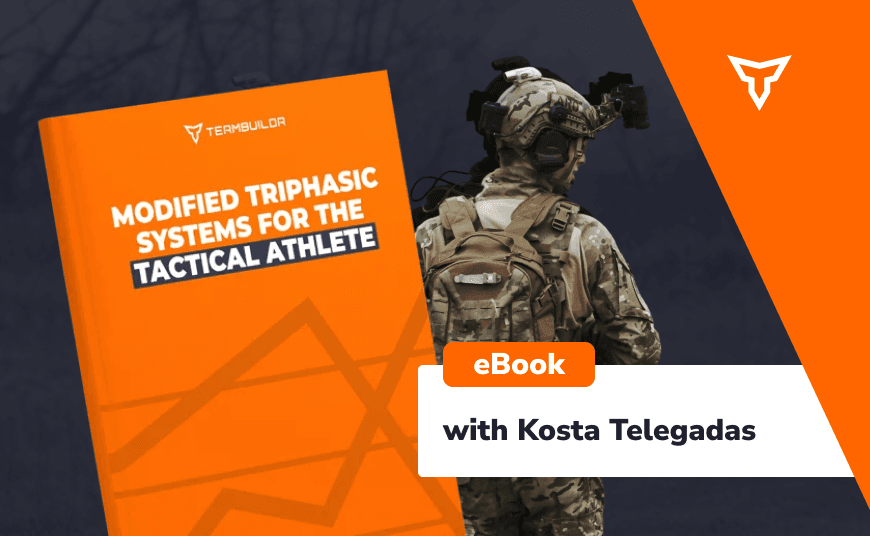
Modified Triphasic Systems for the Tactical Athlete
Triphasic training adapted for tactical populations, organised by tenure rather than sport season. Four progressions from day-one novice to advanced, plus how to undulate the work around an unpredictable schedule.
What you’ll learn
- Place a tactical athlete by tenure rather than by sport season
- Progress from day-one novice through to advanced work
- Undulate loading around a schedule you don't control
- Adapt triphasic principles to a population that never fully deloads
Yours free
We’ll ask who you are once. After that the free library is open, for good.
Yours free
We’ll ask who you are once. After that the free library is open, for good.
Inside the guide
21 pages
The first 4 pages exactly as they appear in the PDF. Select any page to see it full size.
- +17more pages
From the opening pages
Triphasic training is arguably one of the best and modifiable systems at all levels of athletics & in tactical strength and conditioning. However, sometimes coaches may not have established systems or might need clarity on applying the methods and models within the tactical setting. In this book, we will discuss the multiple ways you can program at each level, while simultaneously amplifying the end-user experience due to the voluntary nature of tactical strength and conditioning programs. Variations of programming that I have personally used will be given for the following tenures: Post-op-reconditioning, novice, intermediate & advanced tenures. There is also a section on how to apply these models with weekly and daily undulating periodization. Please note that all of these have been tested by myself and have shown tremendous results within programs I have helped run over the years.
Note: These examples will remove the traditional GPP block and peaking blocks seen in Cal Dietz’s triphasic training book for the sake of time and will focus on the eccentric, isometric & concentric blocks for coaches to program. As a practitioner, I give all credit to Cal Dietz for making this information public and hope to build on his systems already established in the tactical strength and conditioning realm.
Tenure #1
Post-operation rehab/reconditioning - Unfortunately, in the tactical setting injuries do occur and human performance teams must work together with individuals to assist post-operation/postphysical therapy needs. ATs and strength coaches collaborate to discuss how to solve the individual’s issues at hand. Let’s look at a made-up case study example:
Example: Athlete “A” has suffered from a torn meniscus from falling from a timed ruck outdoors in his knee. After 6 months of PT, he is ready to get back out into the field to support his unit, however, he is required to go to strength training and AT sessions 3x each week. Here is an example of how the triphasic training system could assist him with example programming for his Day 1 total body day.
Day 1: ECC PHASE Day 1: ISO PHASE Day 1: CONCENTRIC PHASE A1. Eccentric BW Squat 3x6 (6 sec down) A1. Isometric Goblet Squat 3x5 (4-sec iso) A1. Belt Squat Squat 3x10,8,6 (load to form A2. Eccentric Lat Pulldown 3x6 (6 sec up) A2. Isometric DB High Row 3x6 (4-sec iso each) or RPE 7-8)
Chapters
- 1Introductionp.3
- 2Tenure #1p.4
- 3Tenure #2: Novicep.6
- 4Tenure #3: Intermediatep.10
- 5Tenure #4: Advancedp.14
- 6Undulation Periodizationp.17
- 7Conclusionp.19
- 8About the Authorp.20
- 9Referencesp.21
TeamBuildr
Run this with your athletes.
The programming, the tracking and the reporting in one place, built by coaches who write the same sessions you do.
Read next
Also in Training & Programming
6 chapters · 12 lessons
$80.00Developing Strength & Conditioning Systems for Tactical Athletes & First Responders
Moving from the sport side to tactical work. Six parts on reading the environment, translating what you already know, and programming for people whose schedule and workload you do not control.
More in Tactical Strength
PDF · 41 pages
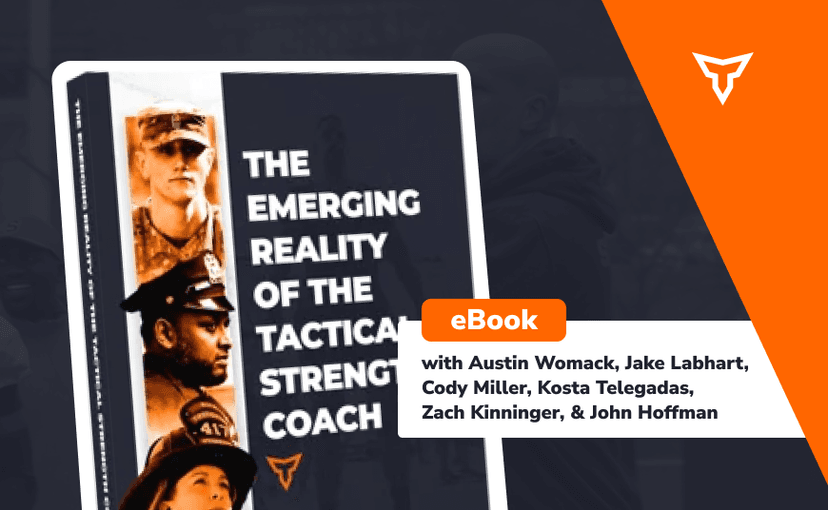
Free · sign upThe Emerging Reality of the Tactical Strength Coach
What the tactical strength coach job actually looks like now: the populations, the constraints, and the gap between how these roles are described and how they are staffed and funded.
Read on the blog · 3 min
FreeAdaptive Training: Navigating Athletic Season Challengesopens blog.teambuildr.com in a new tab
Learn how to implement flexible strength training systems that adjust to the unpredictable nature of an athlete's season for optimal performance.
For College
Read on the blog · 15 min
FreeThings I Wish I Knew Before Becoming TSAC: Part 1opens blog.teambuildr.com in a new tab
What nobody tells you before moving into tactical strength and conditioning: the populations, the politics, and the parts of the job the certification does not cover.
For Tactical
1 chapter · 1 lesson
Free · sign upLow Back Pain in Tactical Populations: An S&C Coach’s Guide
Read on the blog · 6 min
FreeUnderstanding and Applying Sling Systems in Trainingopens blog.teambuildr.com in a new tab
How the body's sling systems transfer force across the posterior chain, and what that means for programming around hamstring and low-back complaints. The most-read article on the blog.
- Format
- Length
- 21 pages
- Sections
- 9
- Category
- Tactical Strength
- Topics
- Training & Programming